15th February 2020
Ponta Delgada is the capital of the Azores and its largest municipality. Here, we docked early on the morning of Valentine’s Day. The day began on a gloomy note; the volcanic highlands were shrouded in grey mist, thick rolling clouds swept across the sky, and there was a hint of rain in the air. The forecast predicted a temperature of 17 degrees, though I suspected that was rather optimistic.

This was to be our third visit to the island of São Miguel, first, a wonderful week of exploration with Sarah before her A-Levels, and then last year, a brief stop as part of a previous cruise. Both Sue and I love this place: friendly people, picturesque settlements, and a climate well-suited to anyone from Northern Europe. There is plenty to see and do, both on land and in the surrounding sea. It’s a must-visit destination for those keen on whale and dolphin spotting, a fantastic location for volcanologists, and a paradise for ramblers, with its breathtaking scenery.
We were in no rush to leave the ship, having already experienced most of the activities offered on the ship’s tours and thoroughly explored the city on our last visit. Today, we decided to fill in the gaps, those parts of the town we had previously overlooked, considering them unremarkable at the time. It was close to 10 a.m. when we finally disembarked from the Magellan, wrapped up in thick fleeces with precautionary raincoats dangling from our rucksacks. A gentle breeze greeted us, and the warm sunshine peeked out from behind the promising clouds.

Turning right out of the terminal exit, we followed a raised walkway that separated the harbour from the city, soon finding ourselves warm enough to shed a layer of clothing. As we did so, an elderly lady emerged from what appeared to be a set of changing rooms built into the harbour wall. She wore an improbably skimpy swimming costume, made all the more striking by a bright pink hat.
 We watched with a mix of bemusement and admiration as she marched purposefully across the quay, descended a set of steps, and, without the slightest hesitation, plunged into the dark waters of the harbour. With a confident stroke, she swam steadily towards the tugboat that had earlier guided the Magellan to its berth.
A moment later, a much younger man, perhaps in his early twenties, emerged. He wrestled briefly with a full-length wetsuit, struggling to pull it over what looked like a thick thermal vest. Once suitably attired, he, too, made his way towards the water, though with far less certainty, easing himself in gingerly. The contrast between them, both in age and, I suspect, in courage, could not have been greater!
Moving on, we left them to their aquatic madness and continued along the walkway until the city began to peter out. Crossing the coastal road, we plunged into suburban Ponta Delgada, where the familiar, ridiculously narrow cobbled streets of the city centre gave way to a less polished area. The buildings here were not as well-maintained, and the shops held little appeal for the average souvenir-hunting tourist.
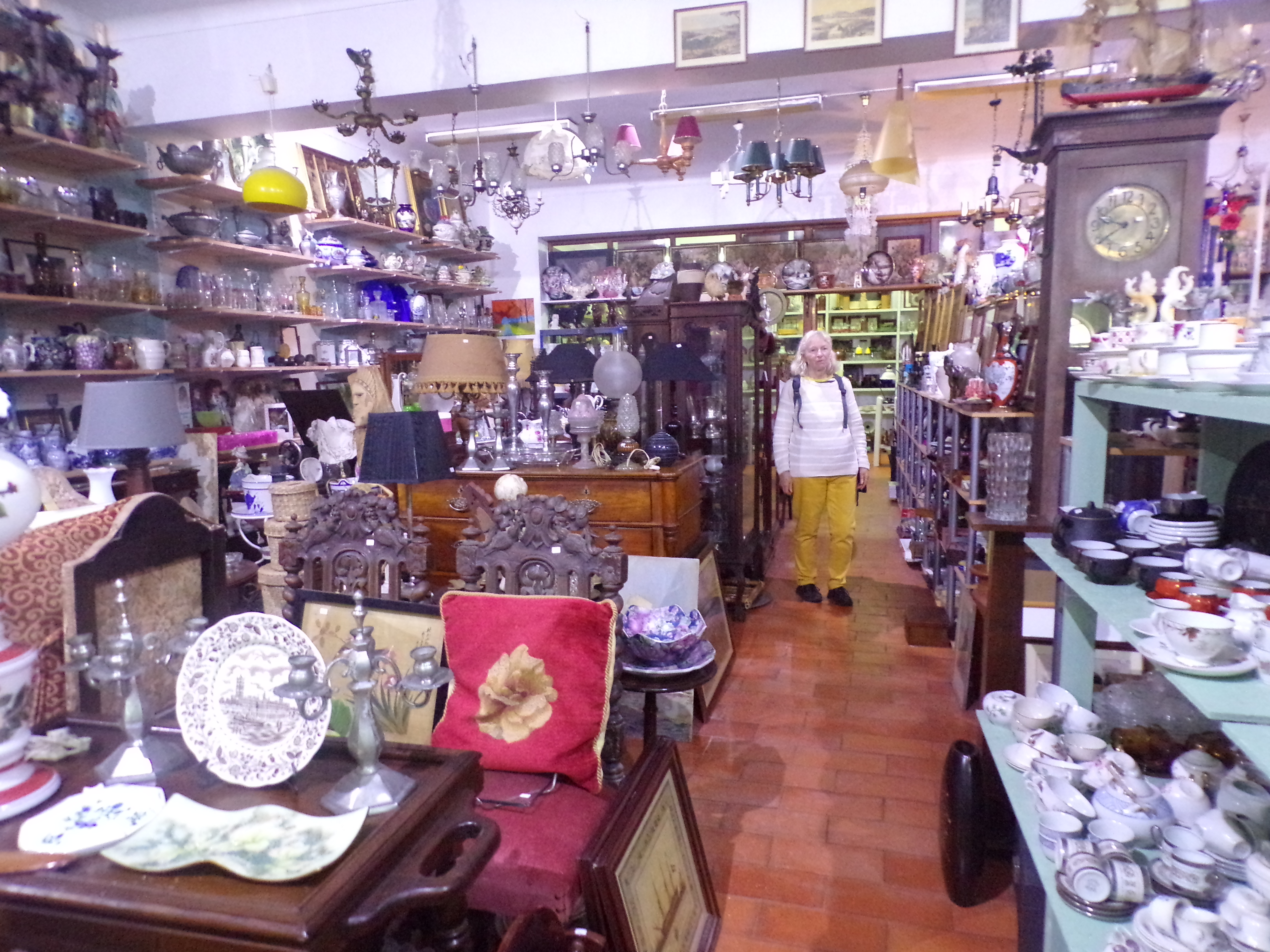
To our delight, we stumbled upon an antique shop with a dark and dingy interior, an Aladdin’s cave of curiosities. Without hesitation, Sue dived in, navigating the narrow aisles with the confidence of a seasoned explorer, methodically working her way through the shelves and the artefact-strewn floor. I followed more cautiously, enjoying the sight of peculiar thingies and mysterious whatsits. There was surely a fortune to be made here, but lacking both suitcase space and the necessary expertise, I resigned myself to merely browsing. I suspect Sue would happily have spent the entire day rummaging for that elusive teacup or forgotten sketch that might fetch tens of thousands, if not a million, at a London auction house.
 Forty minutes later, we emerged with the same wealth as when we had entered, no speculative purchases made, and our dreams of riches reluctantly abandoned.
Our wandering eventually led us back to the centre, where we revisited the Collegio Hotel, once our home for a week, to see what had changed, and for Sue to make use of its facilities. Afterwards, we lingered in a pretty little park, basking in the sunshine and taking advantage of the free WiFi. We caught up with Sarah, who was on her lunch break back in the UK, and chatted until the rain arrived.
We hurried back to the ship through streets that offered no escape from the downpour. In Ponta Delgada, where buildings lack guttering, rainwater cascades freely from rooftops onto unsuspecting pedestrians below. With no drains to carry the water away, the roads quickly transformed into rushing streams, and the flint cobbles, so charming when dry, became treacherous underfoot. Like a pair of drowned rats, we finally reached the ship, where we gratefully took refuge and enjoyed lunch on board.
We ventured out again in the afternoon, this time turning left once more under a blue sky with a gentle breeze that invited guarded optimism for a dry remainder of the day.
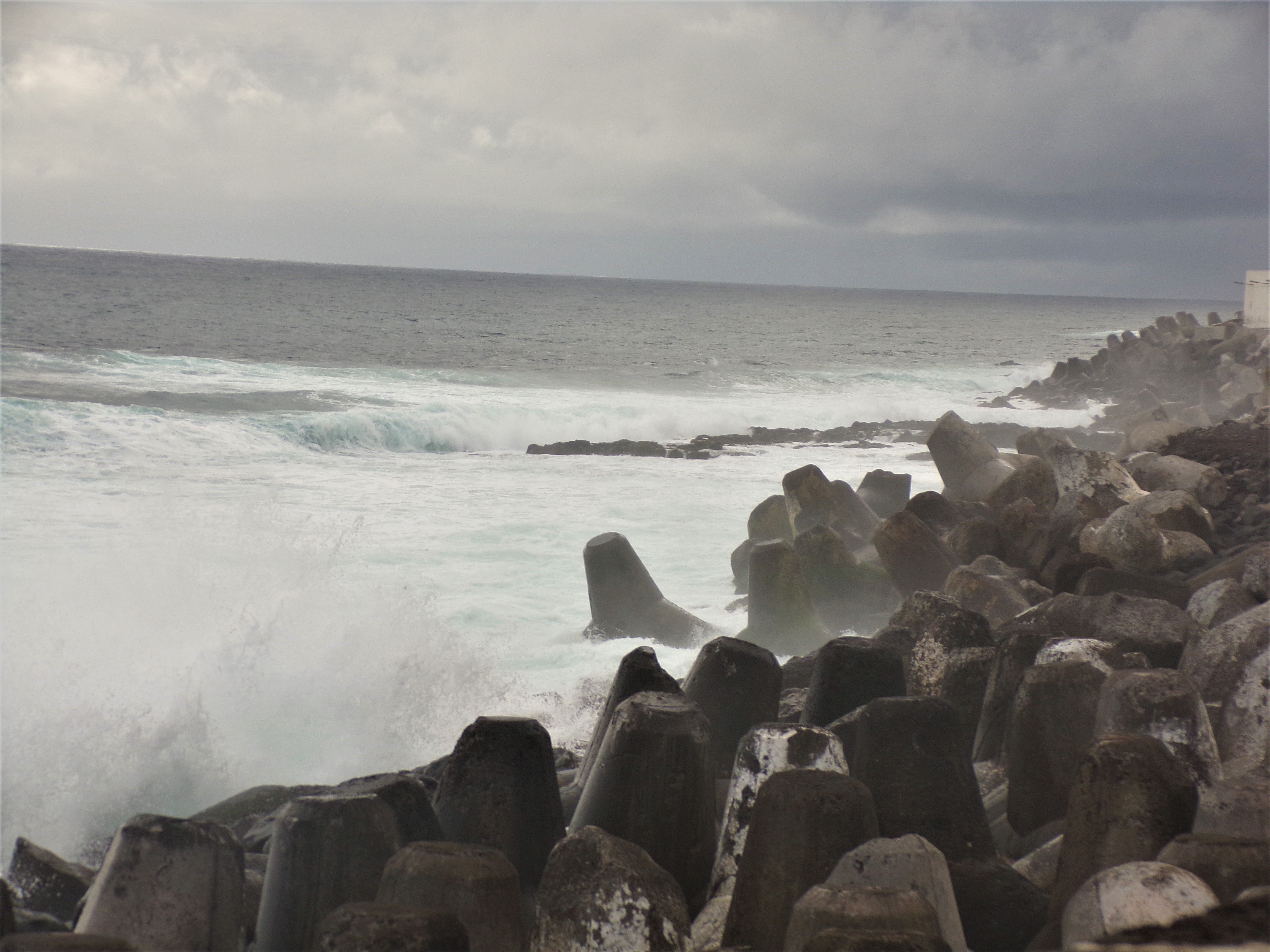
Arriving at Ponta Delgada Fort, situated by the old harbour, we bypassed the small internal military museum, having visited it on a previous occasion, in favour of seeing whether we could walk around its exterior. About three-quarters of the way along, we diverted to climb the massive sea wall that shields the port from the relentless onslaught of the Atlantic.
 We lingered there for quite some time, cooled by the light, salty spray thrown up by waves colliding with the enormous interlocking concrete blocks of the breakwater. Each crashing roller sounded like cannon fire, its force shaking the air. As we watched, a pair of seagulls engaged in a daring game of catch-me-if-you-can with the waves, swooping low to snatch tiny morsels from the crests of the swirling, rolling walls of water. At times, it seemed certain they would be caught in the churning sea, but they always escaped, just in time.
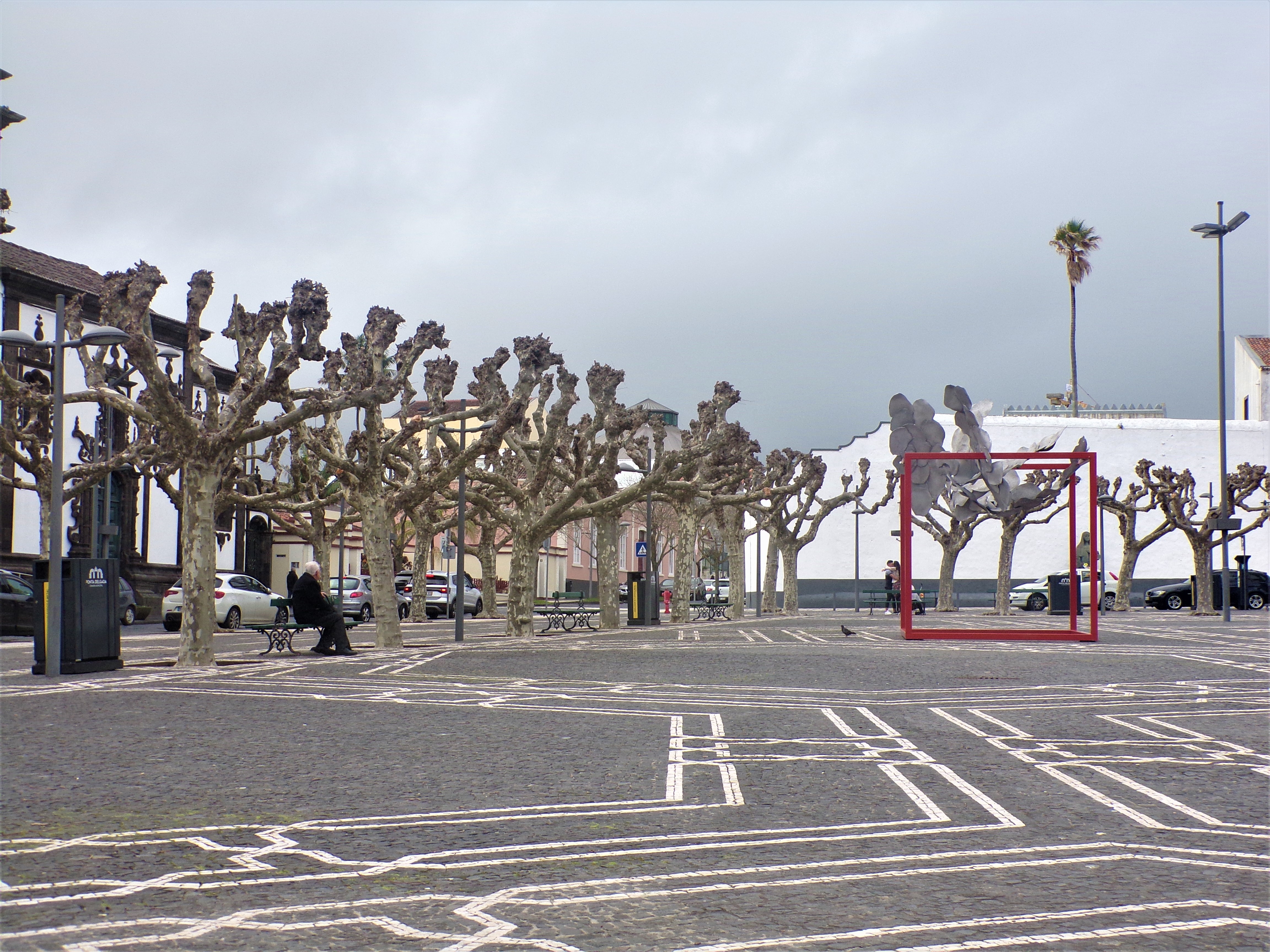
Resuming our wanderings, we eventually rested for a while in one of the city’s splendid plazas, fringed with pollarded trees still bare of leaves. I was in the midst of explaining to Sue the artistic concepts behind a large modernist sculpture, a metal cube within which an abstract shape was suspended, when Ken and Chris appeared.
Ken looked distinctly unwell and admitted as much. They had spent the morning on a ship’s tour and, like us, had come out to explore the city. Their mission had been to find a café that sold the famed custard tarts, something they had been strongly encouraged to sample. We pointed them in the right direction and returned to our discussion.
Disappointingly, Sue’s artistic analysis failed to progress beyond, “It looks like a bird,” as she struggled to grasp the supposed symbolism of the plaza’s trees and the stark, trunkless forms suspended within the cube, within the square.
Simples, if you ask me!
We continued to wander until we felt the first spattering of a shower. Fearing another downpour, we quickly took refuge in a conveniently located harbour-side restaurant, picturesquely perched over the water and facing rows of colourful fishing smacks. At 5 pm, the place was empty of customers, its indoor tables beautifully decorated for Valentine’s Day with red paper roses, red glasses, and elegant place settings for the evening meal. With the rain lashing down outside, they couldn’t turn us away. Azoreans are far too hospitable for that.
We sat alone with our drinks, watching as a couple of windsurfers skimmed across the harbour, slicing through grey squalls of rain, entirely engrossed in their sport and seemingly oblivious to the weather. Once the clouds parted and the sun reappeared, we settled the bill and made our way back to the ship.
BREAKING NEWS: After the evening show, an important announcement came from the captain. Storm Dennis, set to wreak havoc in the UK over the weekend, was going to affect us too. We were due to pass through the Bay of Biscay in a few days, where conditions were forecast to bring waves exceeding 15 metres. As a precaution, the decision had been made to call into the port of Vigo in northern Spain for a day before continuing our journey. Instead of arriving in Tilbury on the 19th, we would now arrive on the 20th.
You can imagine the panic this news caused among our fellow passengers, mainly due to the sudden need to rearrange taxi, bus, car, and flight plans. By the following morning, however, the initial flurry of concern had mostly settled as people quietly tackled their travel changes. “Better to be safe than sorry” became a common refrain over the next few days.
We shall see. Good luck, UK, fingers crossed.


Leave a Reply